The Environmental Impact Assessment Excel Template for Industrial Sites provides a structured framework to systematically evaluate potential environmental effects of industrial projects. It enables users to input data, analyze key environmental parameters, and generate comprehensive reports for regulatory compliance and sustainable planning. This template streamlines the assessment process, promoting efficient decision-making and risk management in industrial development.
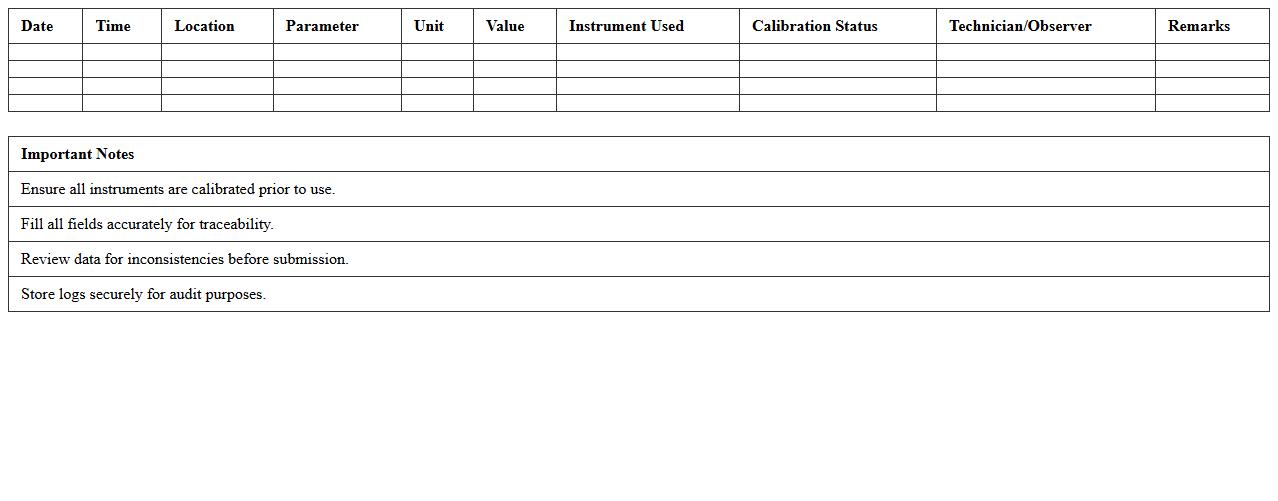
Air Quality Monitoring Data Log Template
The
Air Quality Monitoring Data Log Template document is a structured format used to systematically record and track pollutant levels such as PM2.5, PM10, CO2, and other airborne contaminants. It facilitates the consistent collection of environmental data, enabling accurate analysis of air quality trends over time and helping in identifying pollution sources. By using this template, organizations and individuals can ensure compliance with environmental regulations, support public health initiatives, and make informed decisions to improve air quality.
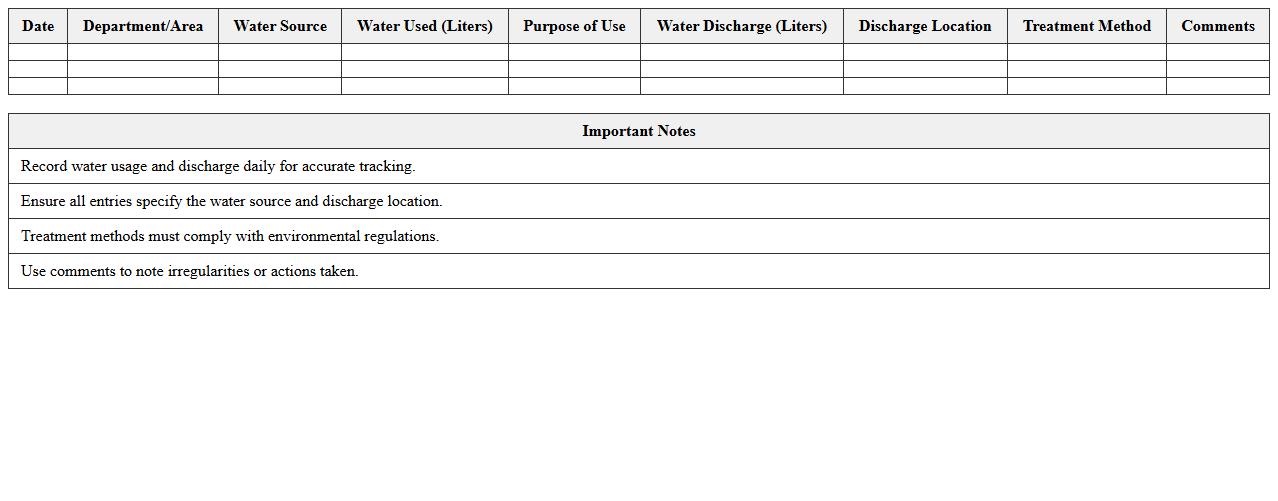
Water Usage and Discharge Tracking Sheet
A
Water Usage and Discharge Tracking Sheet is a detailed document designed to monitor the volume of water consumed and discharged in a specific process or facility. This tracking sheet helps identify patterns and inefficiencies in water use, enabling businesses and organizations to implement sustainable water management practices. By maintaining accurate records, it supports regulatory compliance, reduces operational costs, and promotes environmental responsibility.
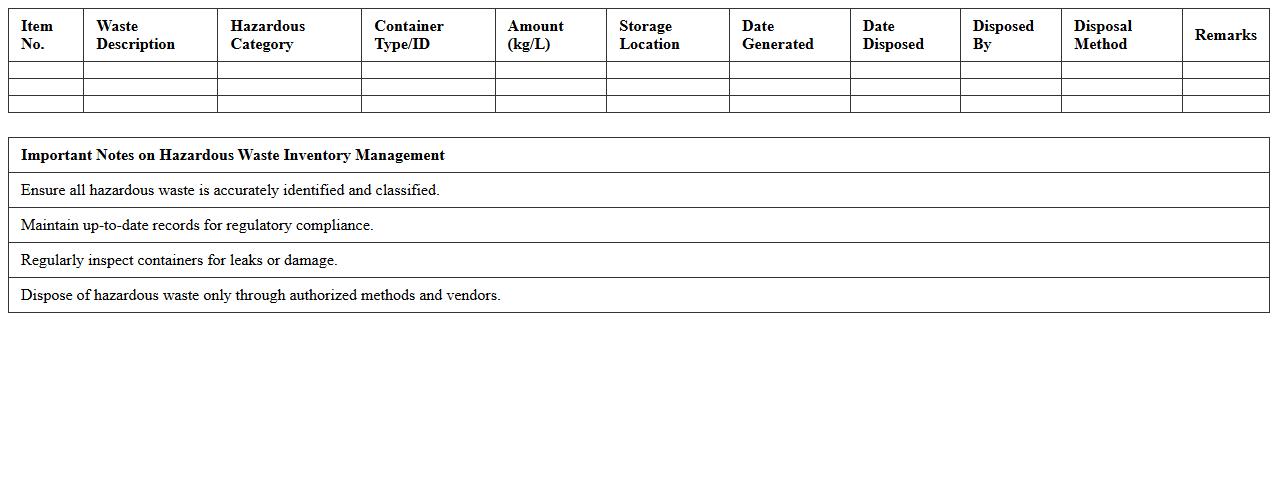
Hazardous Waste Inventory Management Excel
A
Hazardous Waste Inventory Management Excel document is a detailed spreadsheet designed to track and manage hazardous waste materials generated by a facility, including quantities, types, storage locations, and disposal dates. It helps ensure regulatory compliance by organizing critical data required for reporting to environmental agencies and supports operational safety by providing clear visibility of waste hazards on-site. This tool optimizes waste handling processes, reduces environmental risks, and improves overall efficiency in hazardous waste management.
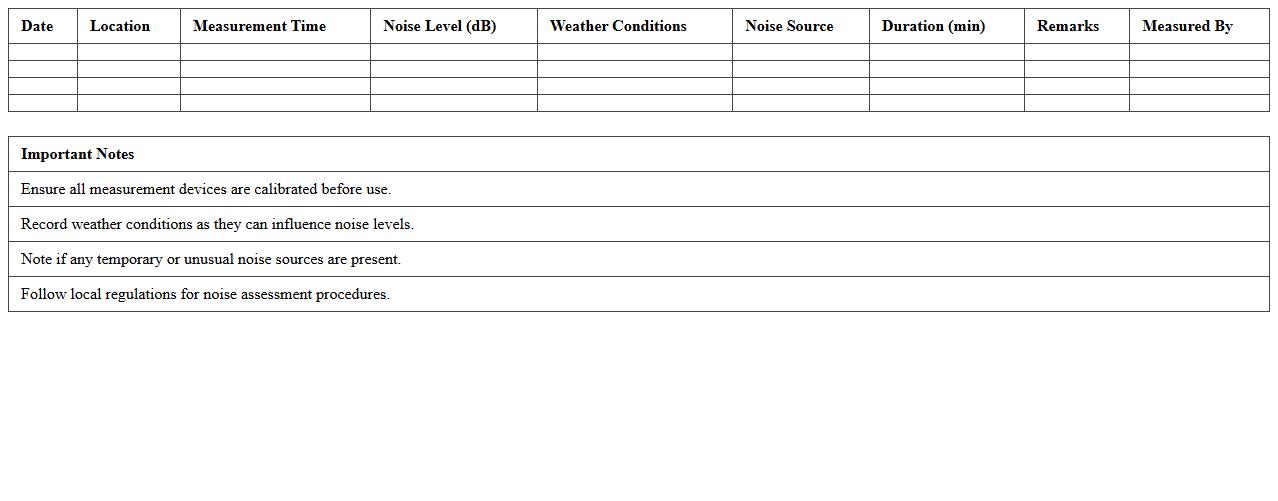
Noise Pollution Assessment Record Sheet
A
Noise Pollution Assessment Record Sheet is a detailed document used to systematically capture data on noise levels in specific environments, helping identify sources and patterns of noise pollution. This record sheet is essential for monitoring compliance with regulatory noise standards, enabling authorities and organizations to implement effective noise control measures. By providing accurate and organized data, it supports informed decision-making to protect public health and improve environmental quality.
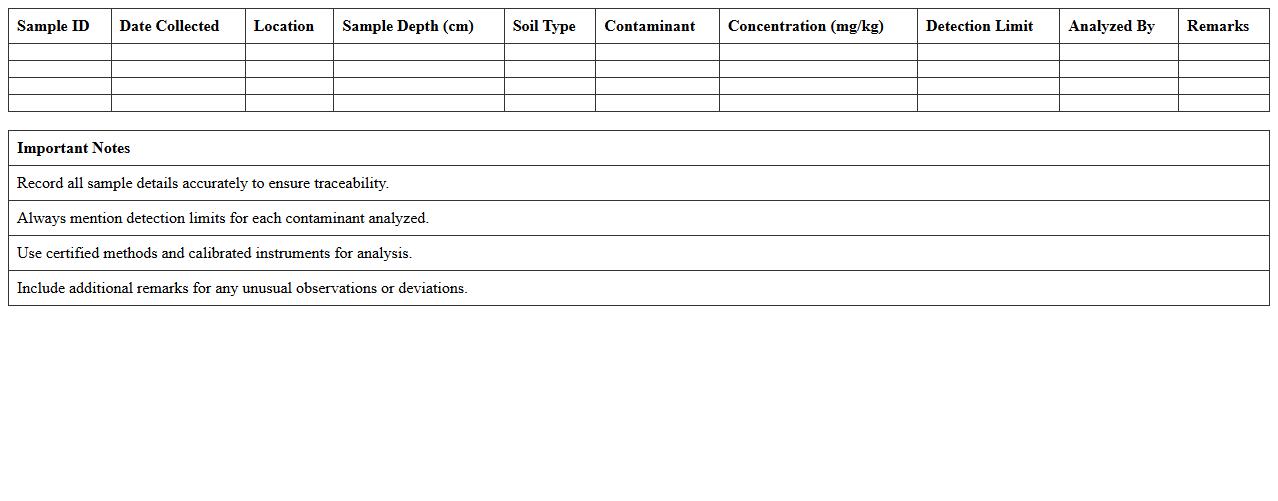
Soil Contamination Analysis Data Sheet
A
Soil Contamination Analysis Data Sheet is a detailed document that records the presence and concentration of pollutants or hazardous substances in soil samples. It serves as a critical tool for environmental scientists, engineers, and policymakers to assess soil quality, identify contamination sources, and develop remediation strategies. This data sheet ensures informed decision-making for land use planning, regulatory compliance, and protecting public health from soil-borne contaminants.
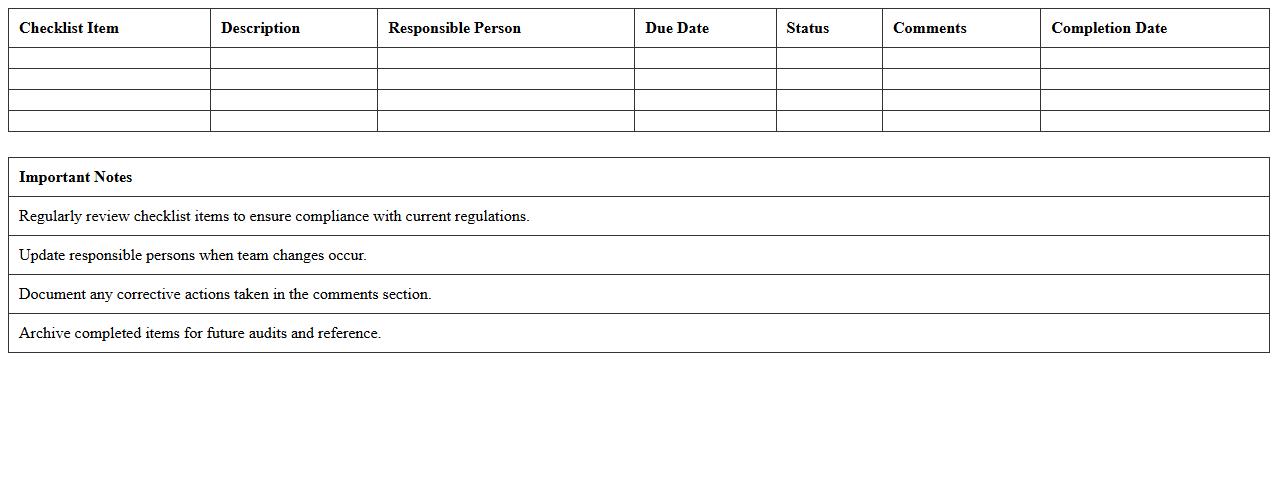
Environmental Compliance Checklist Tracker
The
Environmental Compliance Checklist Tracker document is a systematic tool designed to monitor and ensure adherence to environmental regulations and standards. It helps organizations identify compliance gaps, track corrective actions, and maintain documentation for audits and reporting. Using this tracker improves environmental performance, reduces regulatory risks, and supports sustainable business practices.
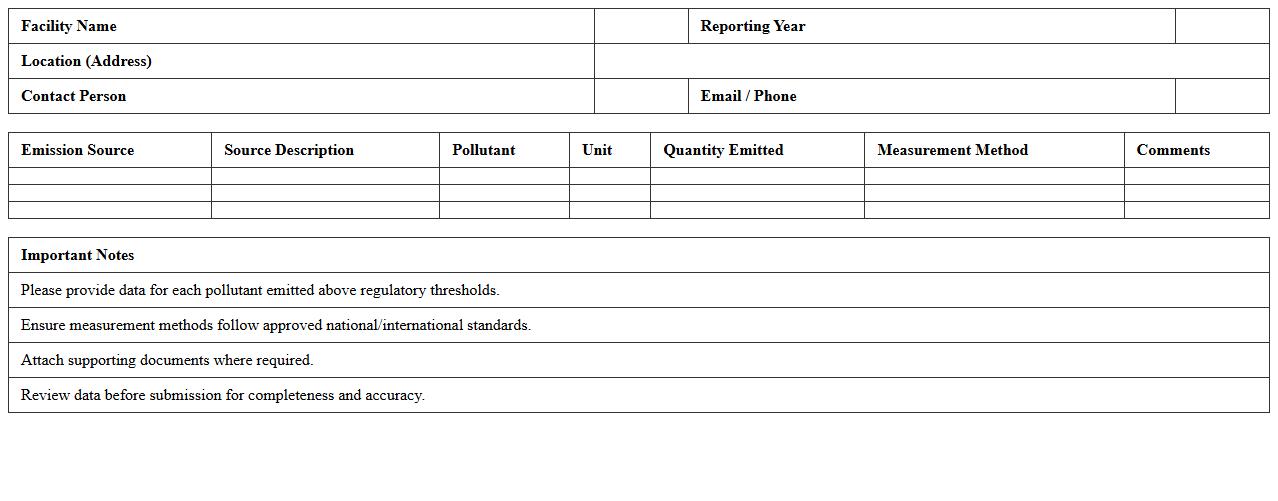
Industrial Emissions Reporting Template
The
Industrial Emissions Reporting Template document serves as a standardized tool for collecting and submitting data on pollutants released by industrial facilities. This template ensures accurate, consistent, and transparent reporting of emissions, facilitating regulatory compliance and environmental monitoring. It is useful for industries, regulators, and environmental agencies to track emission trends, identify sources of pollution, and implement effective control measures.
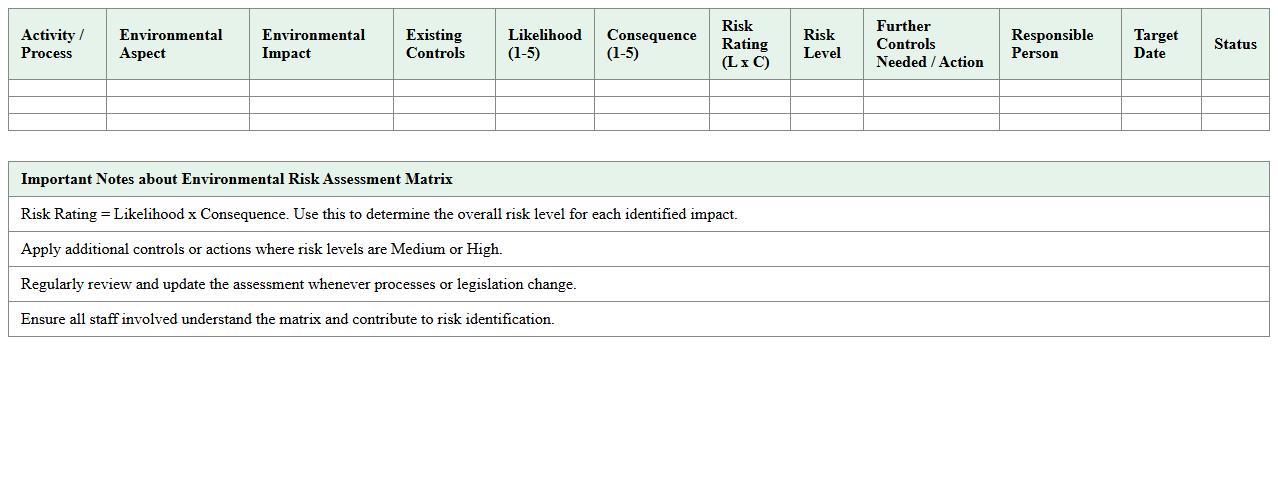
Environmental Risk Assessment Matrix
An
Environmental Risk Assessment Matrix document systematically evaluates potential environmental hazards by categorizing risks based on their likelihood and impact severity. This tool helps organizations prioritize mitigation efforts, ensuring effective resource allocation to reduce adverse environmental consequences. It is essential for compliance with regulatory standards and supports sustainable decision-making processes across various industries.
Biodiversity Impact Monitoring Log
The
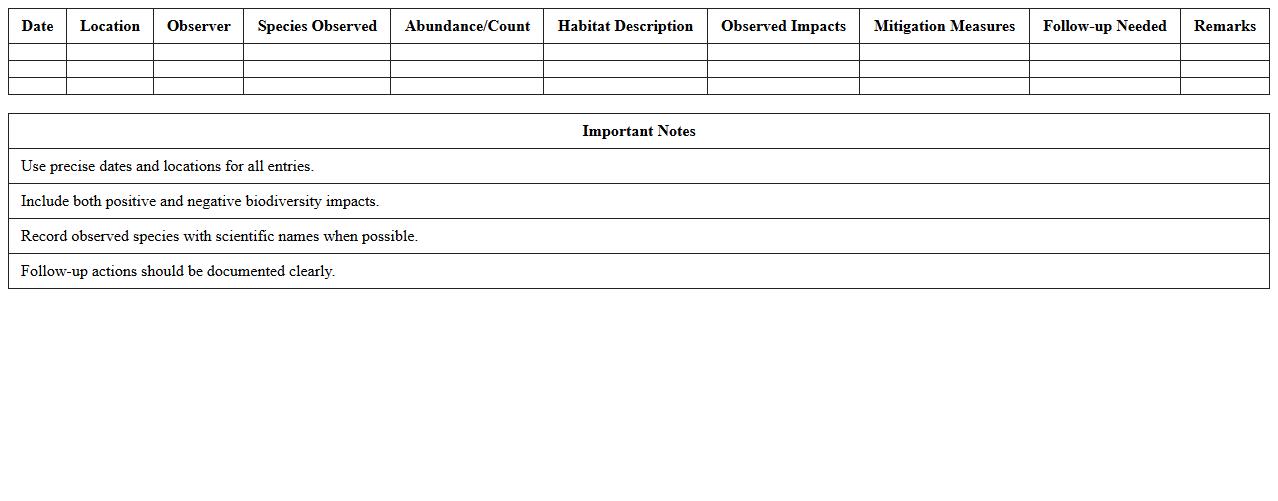
Biodiversity Impact Monitoring Log document systematically records data on changes in ecosystems, species populations, and environmental conditions over time. It is essential for identifying positive or negative trends in biodiversity, enabling effective management and conservation efforts. Using this log helps organizations comply with environmental regulations and supports informed decision-making to protect natural habitats.
Energy Consumption and Efficiency Register
The
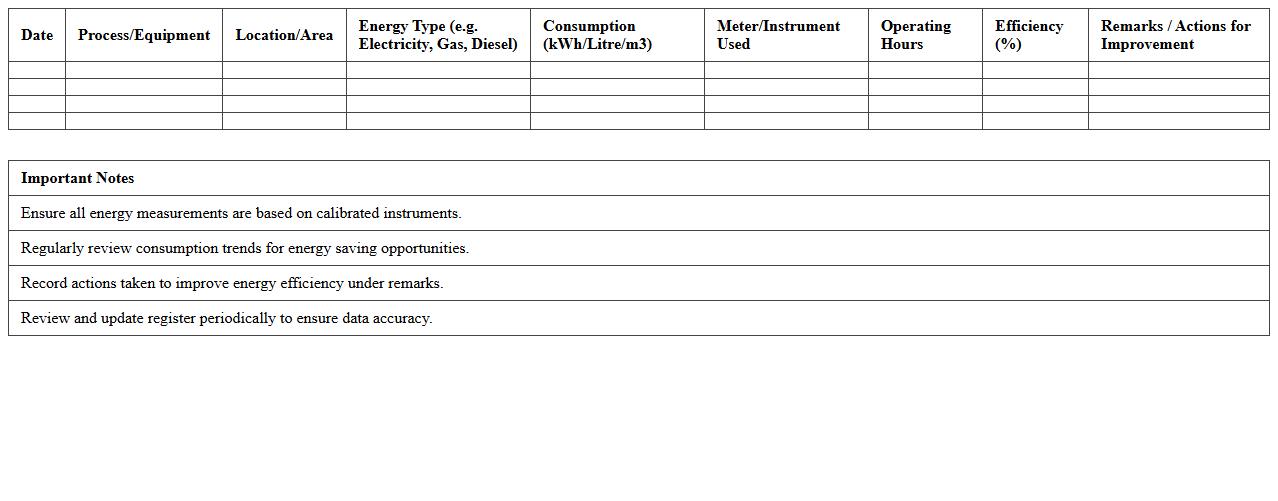
Energy Consumption and Efficiency Register document systematically records and analyzes energy usage patterns and efficiency measures within an organization or facility. It serves as a crucial tool for identifying high-energy-consuming processes and areas where energy efficiency can be improved, thereby reducing operational costs and environmental impact. By maintaining this register, businesses can track progress toward sustainability goals and ensure compliance with energy management regulations.
Which Excel templates best track air emissions in Environmental Impact Assessment for industrial sites?
The best Excel templates for tracking air emissions in Environmental Impact Assessments (EIA) feature predefined columns for pollutant types, emission sources, and quantity measurements. These templates often include automated calculations for emission factors and compliance thresholds, ensuring accurate monitoring. Using templates that integrate dropdown lists and conditional formatting significantly improves data accuracy and usability.
How to automate EIA data validation in Excel for hazardous waste reporting?
Automating data validation in Excel for hazardous waste reporting involves setting strict validation rules using Data Validation features to restrict input types and ranges. Implementing conditional formatting alerts users to potential errors or missing data in real-time, enhancing data integrity. Additionally, macros can be programmed to automate repetitive checks, streamlining the validation process efficiently.
What are key Excel formulas for calculating water usage impacts in industrial EIAs?
Key Excel formulas for calculating water usage impacts in industrial EIAs include SUMPRODUCT for aggregating variable water use across processes, and IF statements to apply conditional thresholds. The AVERAGE function helps analyze typical water consumption patterns, while custom formulas can estimate water savings or efficiency improvements. Combining these formulas enables comprehensive assessment of water-related environmental impacts.
How to integrate GIS location data into EIA Excel sheets for site assessments?
Integrating GIS location data into EIA Excel sheets can be achieved by exporting coordinates and attribute data from GIS software into CSV format for import into Excel. Geospatial details such as latitude, longitude, and site feature descriptions can be maintained in structured columns for better site analysis. Additionally, linking Excel data with GIS visualization tools enhances spatial decision-making in assessments.
Which Excel charts most effectively visualize noise pollution data in industrial EIA reports?
Line charts and scatter plots are highly effective for visualizing noise pollution data in industrial EIA reports, as they clearly display fluctuations over time or spatial variation. Bar charts offer straightforward comparison of noise levels across different monitoring stations or time periods. Using a combination of these charts with appropriate labeling provides a comprehensive visual understanding of noise impacts.
More Assessment Excel Templates