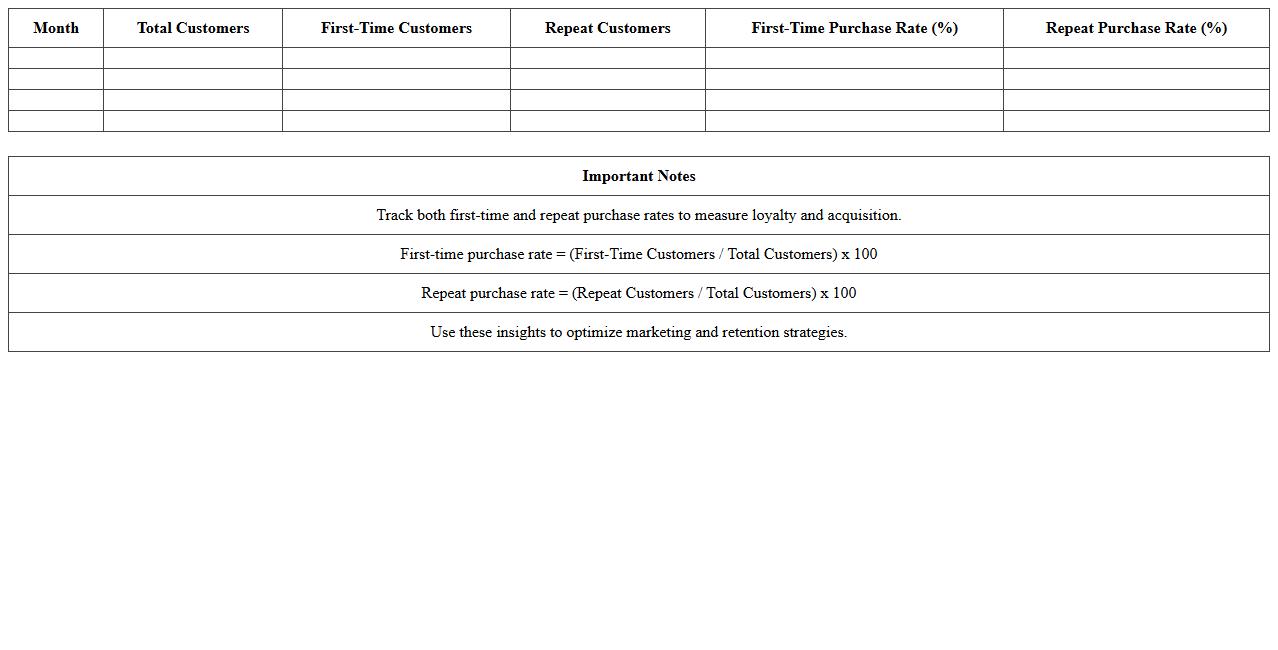
First-Time vs Repeat Customer Purchase Rate Tracker
The
First-Time vs Repeat Customer Purchase Rate Tracker document monitors the proportion of new customers compared to returning customers over a specified period. By analyzing this data, businesses can gauge customer loyalty, evaluate the effectiveness of retention strategies, and identify growth opportunities. Tracking these purchase rates informs marketing efforts and enhances customer relationship management for improved revenue generation.
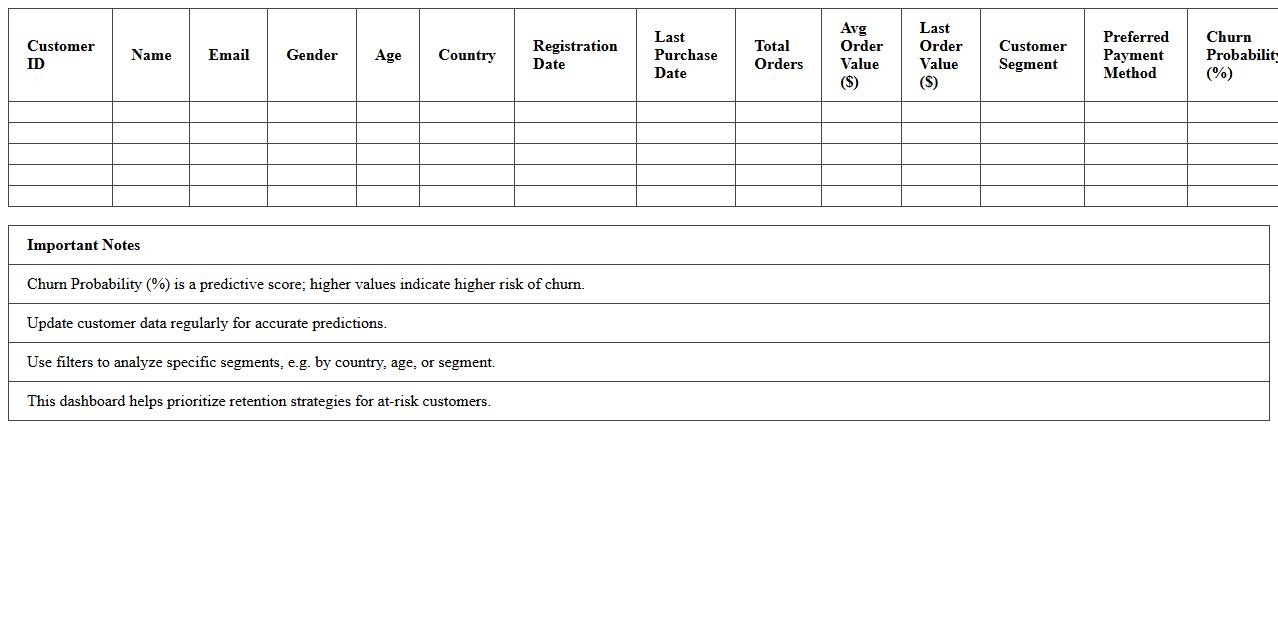
E-commerce Customer Churn Prediction Dashboard
The
E-commerce Customer Churn Prediction Dashboard document provides a comprehensive overview of tools and methodologies used to identify customers at risk of leaving an online store. It compiles crucial data visualizations, predictive analytics models, and actionable insights that help businesses focus retention efforts on high-risk segments. This document is useful for optimizing marketing strategies, reducing customer attrition, and enhancing revenue by enabling proactive engagement with potential churners.
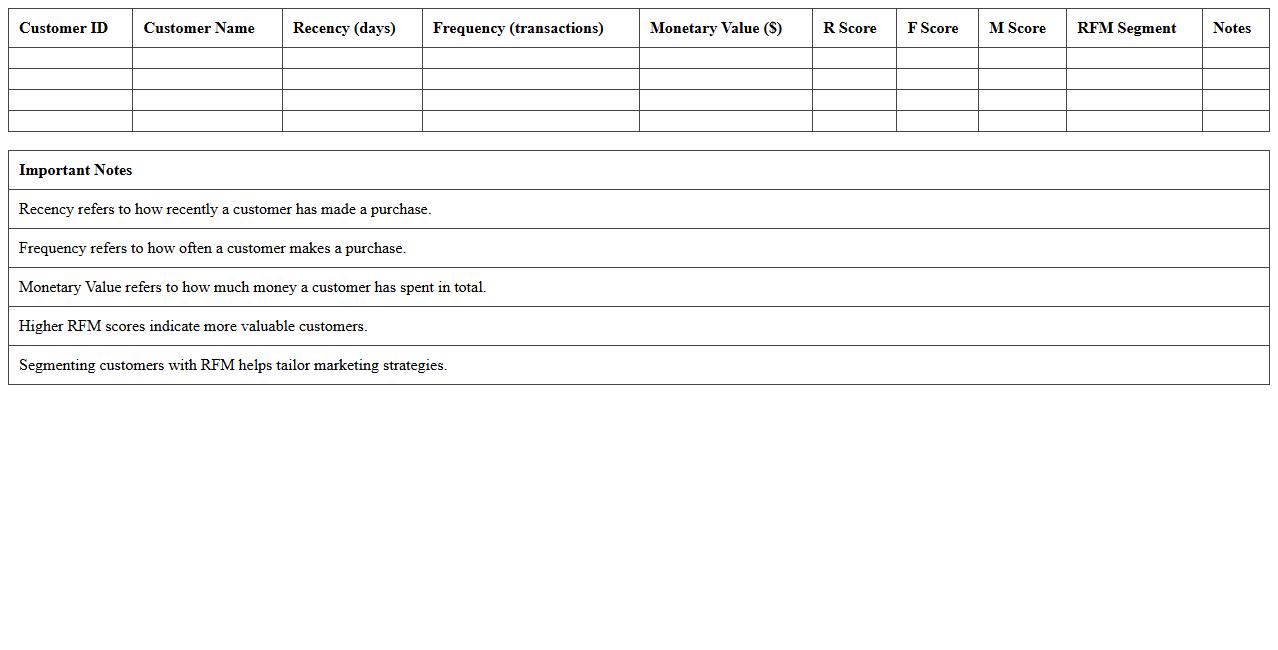
Recency, Frequency, Monetary Value (RFM) Segmentation Sheet
The
Recency, Frequency, Monetary Value (RFM) Segmentation Sheet is a data analysis tool used to evaluate customer behavior by categorizing individuals based on how recently they made a purchase, how often they buy, and the amount they spend. This segmentation helps businesses identify high-value customers, tailor marketing strategies, and optimize customer retention efforts. By leveraging RFM insights, companies can enhance targeted campaigns and increase overall revenue efficiency.
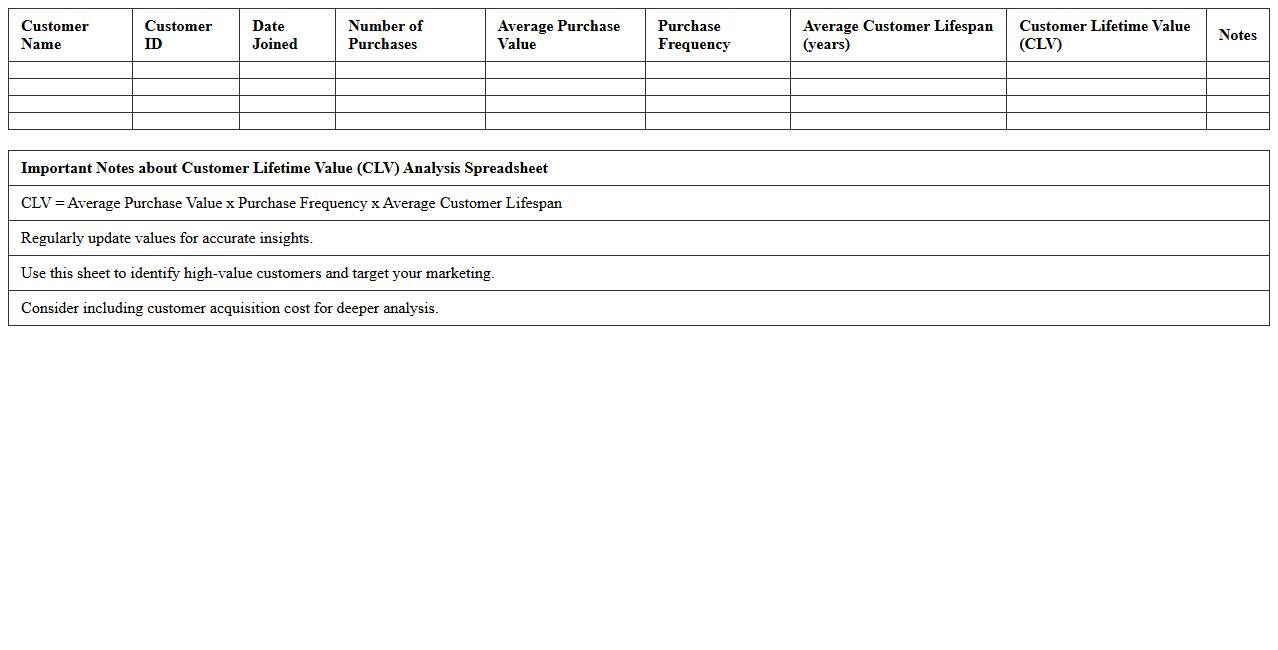
Customer Lifetime Value (CLV) Analysis Spreadsheet
A Customer Lifetime Value (CLV) Analysis Spreadsheet is a tool designed to calculate the total worth of a customer to a business over the entire duration of their relationship. This document helps businesses identify high-value customers, optimize marketing strategies, and make informed decisions about customer acquisition and retention. By leveraging a
CLV Analysis Spreadsheet, companies can increase profitability by focusing resources on the most valuable customer segments and improving customer satisfaction.
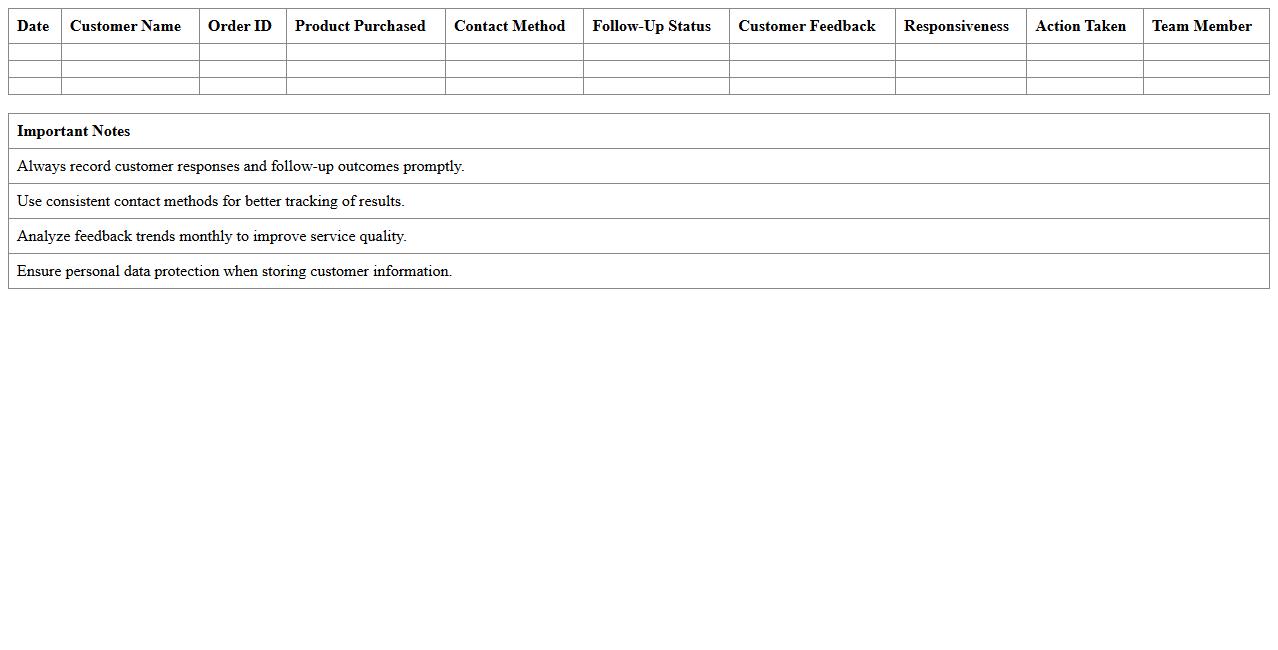
Post-Purchase Follow-Up Performance Tracker
The
Post-Purchase Follow-Up Performance Tracker document monitors customer interactions and satisfaction after a purchase, providing valuable insights into buyer behavior and product reception. It helps identify trends in customer feedback, track the effectiveness of follow-up communications, and improves retention strategies. By analyzing this data, businesses can enhance customer experience, increase loyalty, and reduce churn rates.
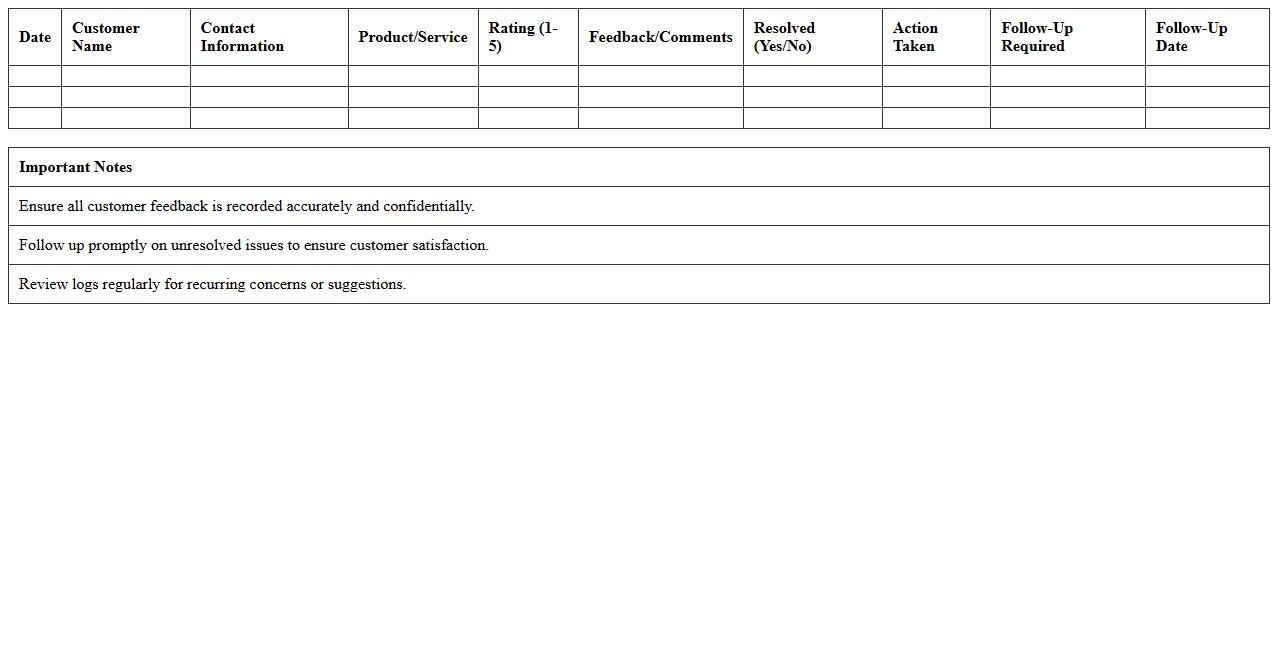
Customer Feedback and Satisfaction Survey Results Log
The
Customer Feedback and Satisfaction Survey Results Log document systematically records customer responses and satisfaction ratings, providing valuable insights into customer experiences and expectations. It helps identify strengths and areas for improvement, enabling businesses to make data-driven decisions to enhance products, services, and overall customer satisfaction. Utilizing this log supports continuous quality improvement and fosters customer loyalty by addressing concerns promptly and effectively.
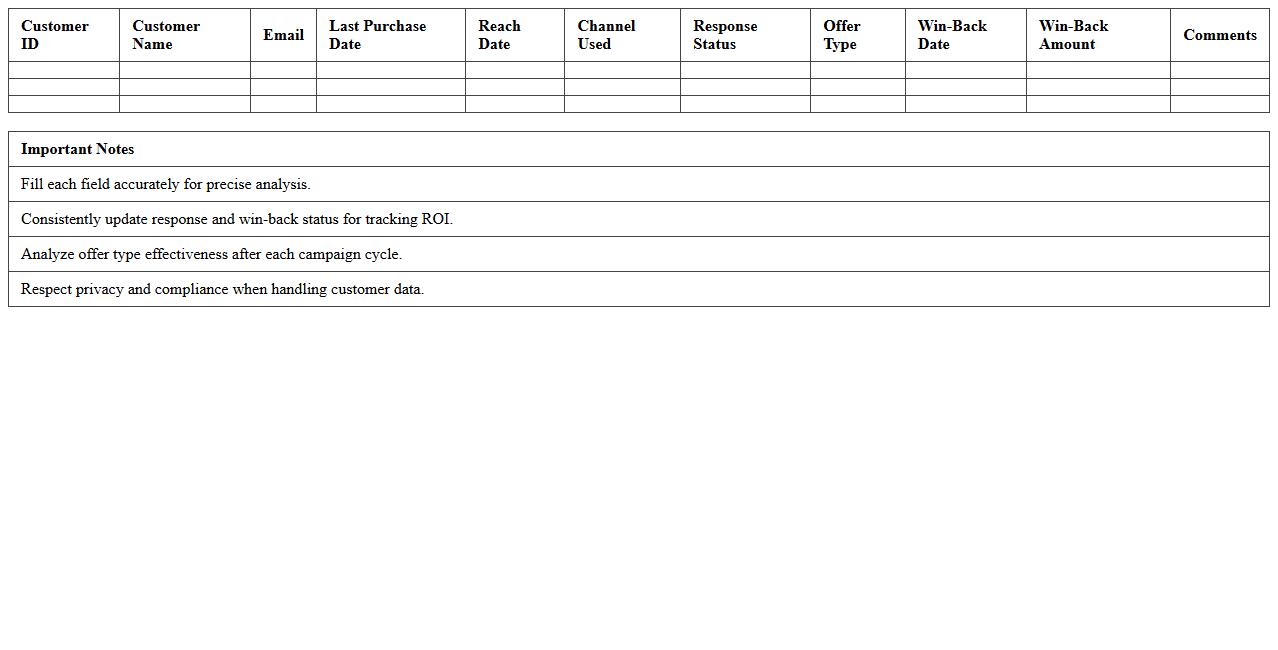
Win-Back Campaign Results Analyzer
The
Win-Back Campaign Results Analyzer document provides a comprehensive assessment of customer re-engagement efforts by evaluating key metrics such as open rates, click-through rates, and conversion rates. It enables marketers to identify the most effective strategies for reclaiming inactive customers and optimizing future campaigns. By utilizing data-driven insights, businesses can enhance customer retention, increase ROI, and tailor messaging to boost reactivation success.
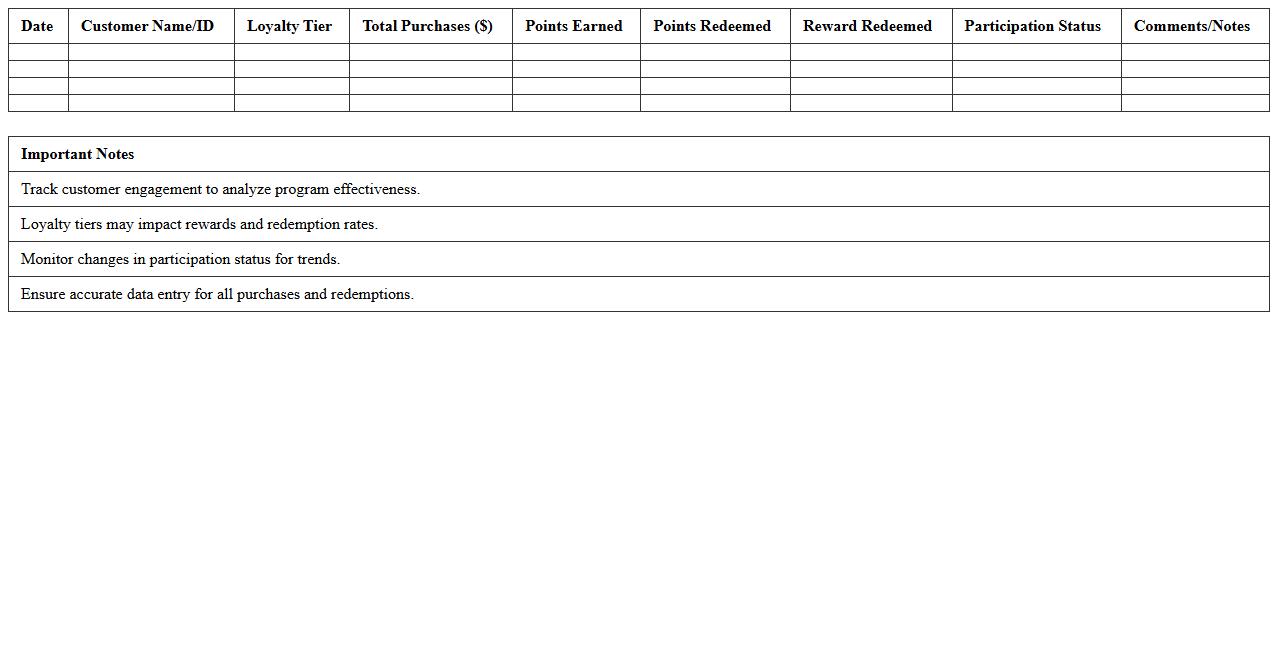
Loyalty Program Participation and Impact Tracker
The
Loyalty Program Participation and Impact Tracker document systematically monitors customer enrollment and engagement rates in loyalty initiatives, providing critical insights into program effectiveness. It captures transaction frequency, reward redemption patterns, and customer retention metrics to evaluate the financial and behavioral impact of loyalty campaigns. This data-driven approach enables optimized marketing strategies, enhanced customer value, and improved ROI by aligning program incentives with consumer preferences.
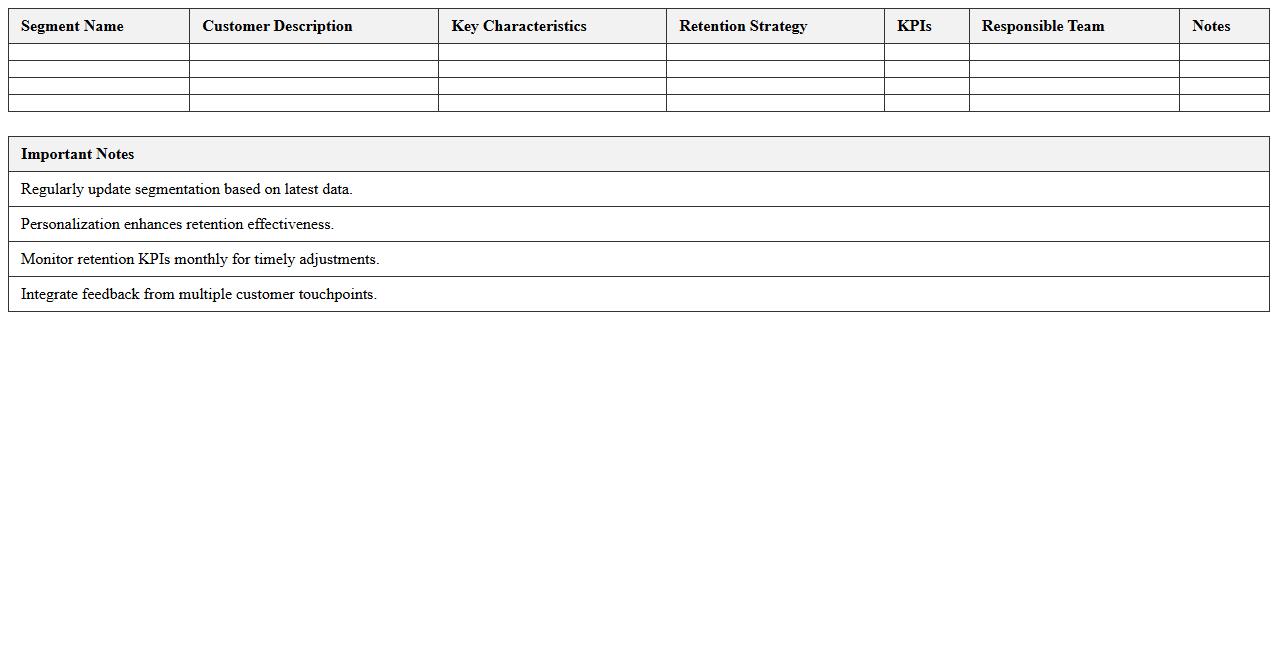
Customer Segmentation for Retention Strategies
Customer Segmentation for Retention Strategies document provides a detailed analysis of dividing a customer base into distinct groups based on behaviors, preferences, and purchase history to tailor retention efforts effectively. By leveraging
customer segmentation, businesses can identify high-value segments, customize communication, and implement targeted loyalty programs that increase customer satisfaction and reduce churn rates. This document is essential for optimizing marketing budgets and enhancing long-term customer relationships in competitive markets.
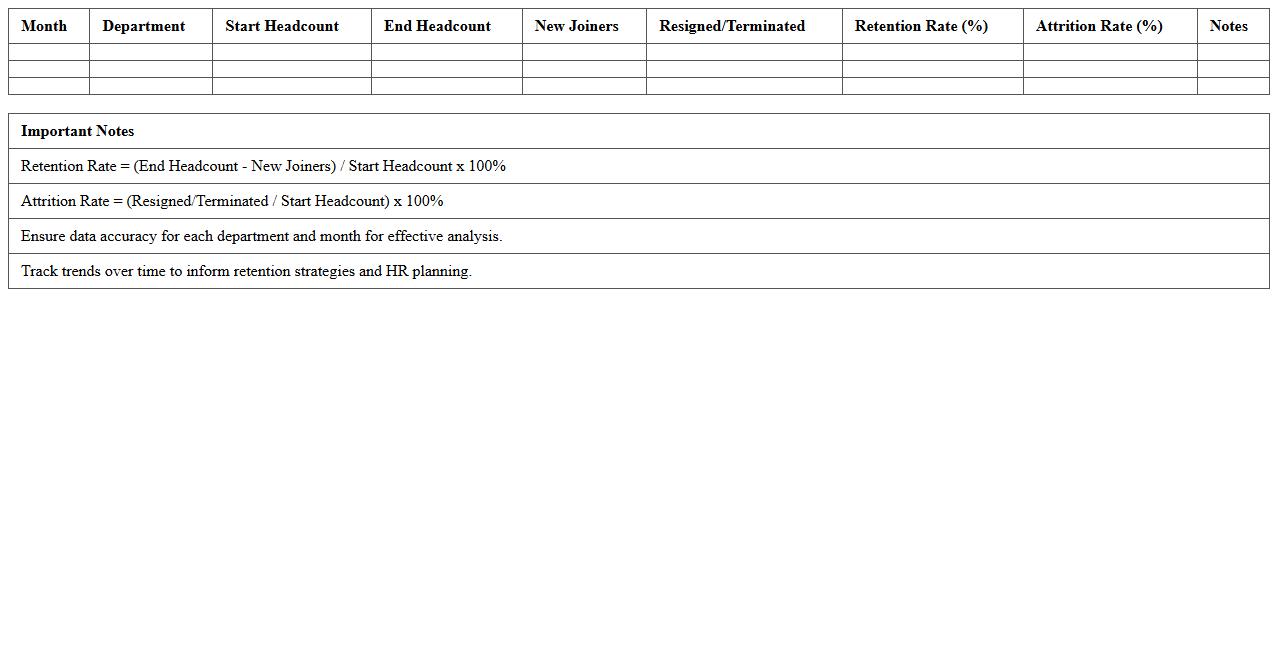
Monthly Retention and Attrition Rate Report
The
Monthly Retention and Attrition Rate Report is a critical document that tracks the percentage of customers or employees retained versus those lost over a specific month. This report provides valuable insights into customer loyalty, employee satisfaction, and overall business health by highlighting trends in retention and attrition rates. Businesses use this data to identify areas for improvement, develop strategies to reduce churn, and enhance long-term growth and stability.
Specific Retention Cohorts Identified in the Customer Retention Analysis Excel for E-commerce
The Excel analysis categorizes customers into specific retention cohorts based on their first purchase date. These cohorts allow the business to track retention patterns over distinct time periods. By segmenting customers in this way, it becomes easier to analyze retention behaviors and target marketing efforts accordingly.
Churn Rate Calculation Methods Addressed in the Letter
The letter outlines that churn rate is calculated by measuring the percentage of customers who do not make repeat purchases within a specific timeframe. It emphasizes the use of cohort analysis to better understand churn across different customer groups. This method provides a more precise view of customer attrition trends over time.
KPIs Highlighted for Evaluating Repeat Customer Value
The analysis highlights key performance indicators such as repeat purchase rate, average order value, and customer lifetime value. Tracking these KPIs helps in assessing how valuable repeat customers are to the business's overall revenue. These metrics are crucial for developing retention strategies that boost profitability.
Recommendation of Personalized Retention Strategies Based on Excel Findings
The letter recommends personalized retention strategies tailored to specific customer segments identified in the Excel data. It suggests leveraging customer behavior insights to deliver targeted offers and communications. Implementing these strategies aims to improve customer engagement and loyalty effectively.
Visualization and Interpretation of Seasonality Trends in Customer Retention
The analysis uses charts and graphs to visualize seasonality trends impacting customer retention rates. These visual tools help interpret how retention fluctuates across different times of the year. Understanding seasonality patterns enables better planning for marketing campaigns and inventory management.