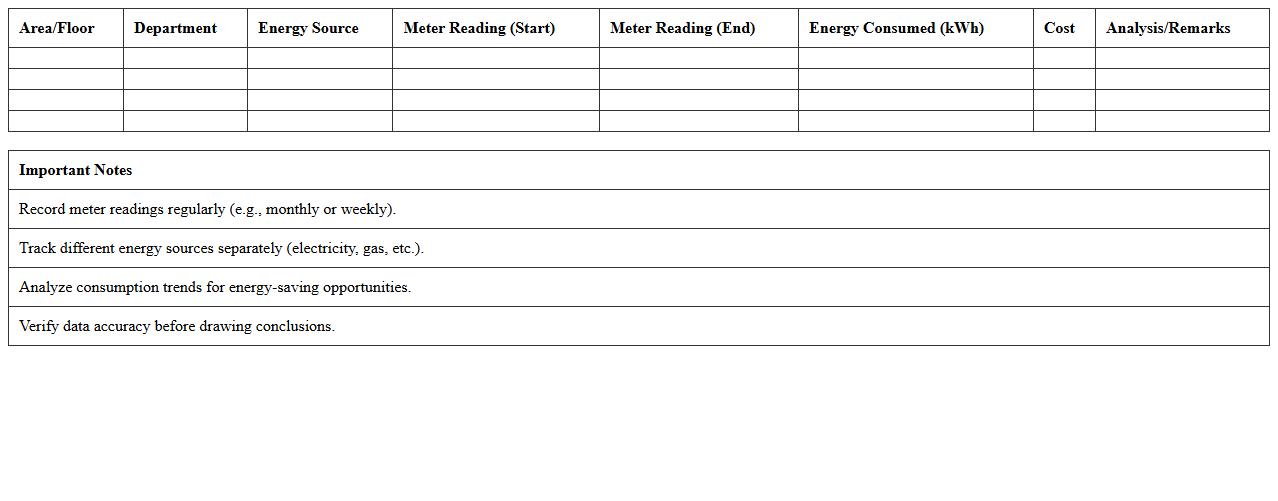
Office Building Energy Consumption Analysis Template
The
Office Building Energy Consumption Analysis Template document serves as a comprehensive tool to track and evaluate energy usage patterns within office buildings, enabling efficient identification of high-consumption areas. By organizing data on electricity, heating, and cooling systems, this template facilitates targeted energy-saving strategies and cost-reduction efforts. It supports sustainability goals by providing actionable insights for optimizing operational efficiency and minimizing environmental impact.
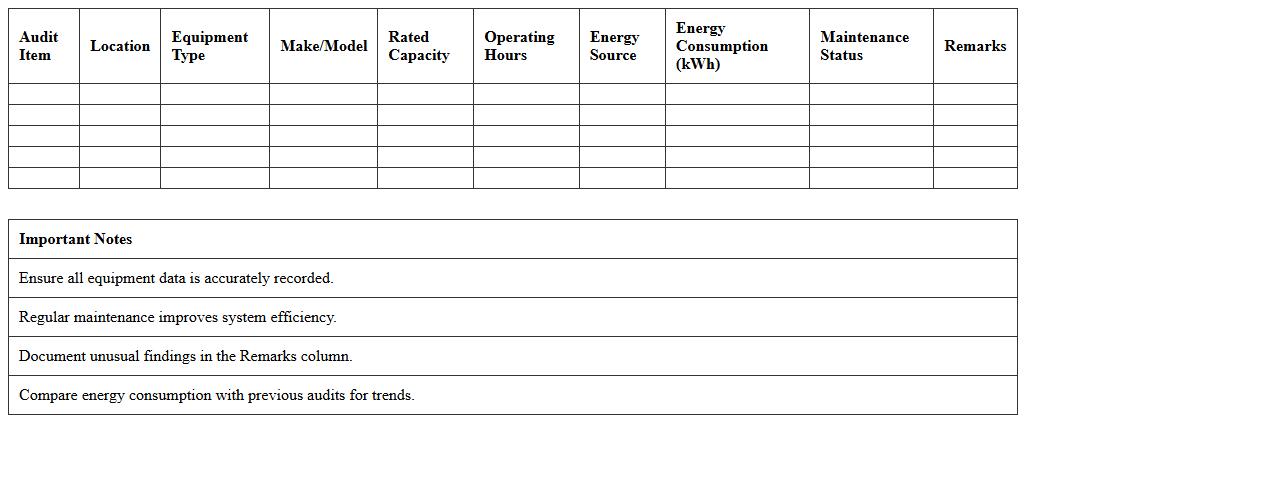
HVAC System Energy Audit Excel Sheet
The
HVAC System Energy Audit Excel Sheet is a comprehensive tool designed to analyze and optimize energy consumption within heating, ventilation, and air conditioning systems. It allows for systematic data entry, comparison of energy usage patterns, and identification of inefficiencies in HVAC operations. Utilizing this document helps facility managers reduce energy costs, improve system performance, and support sustainability goals through data-driven decision-making.
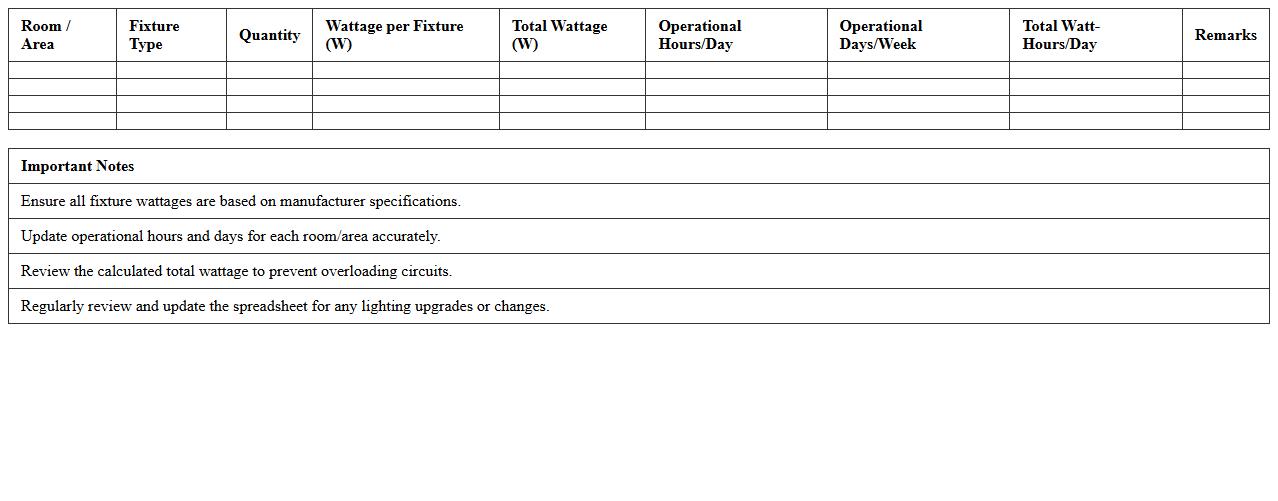
Lighting Load Assessment Spreadsheet
The
Lighting Load Assessment Spreadsheet is a tool designed to calculate and analyze the electrical load generated by lighting systems within a building or space. It helps in accurately estimating power consumption, ensuring compliance with electrical standards, and optimizing energy efficiency. This document is useful for electricians, facility managers, and engineers to plan capacity, reduce costs, and avoid overload issues in lighting circuits.
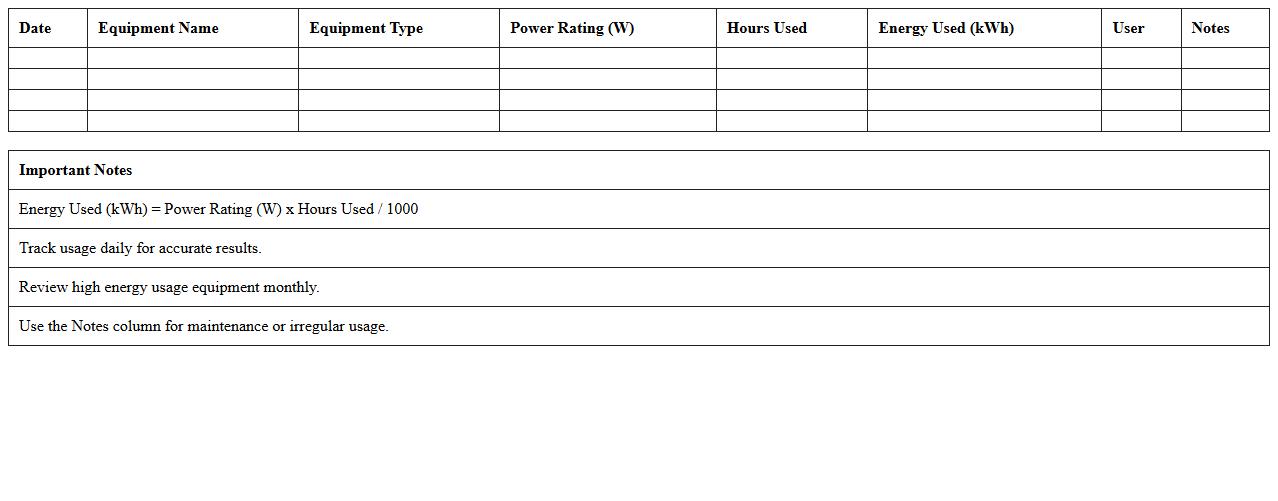
Office Equipment Energy Usage Tracker
The
Office Equipment Energy Usage Tracker document systematically records energy consumption data for various office devices, enabling businesses to monitor and manage their power usage effectively. By analyzing this information, organizations can identify high-energy-consuming equipment, optimize energy efficiency, and reduce operational costs. This tool supports sustainable practices and helps achieve environmental compliance goals.
Energy Savings Opportunities Log for Offices
The
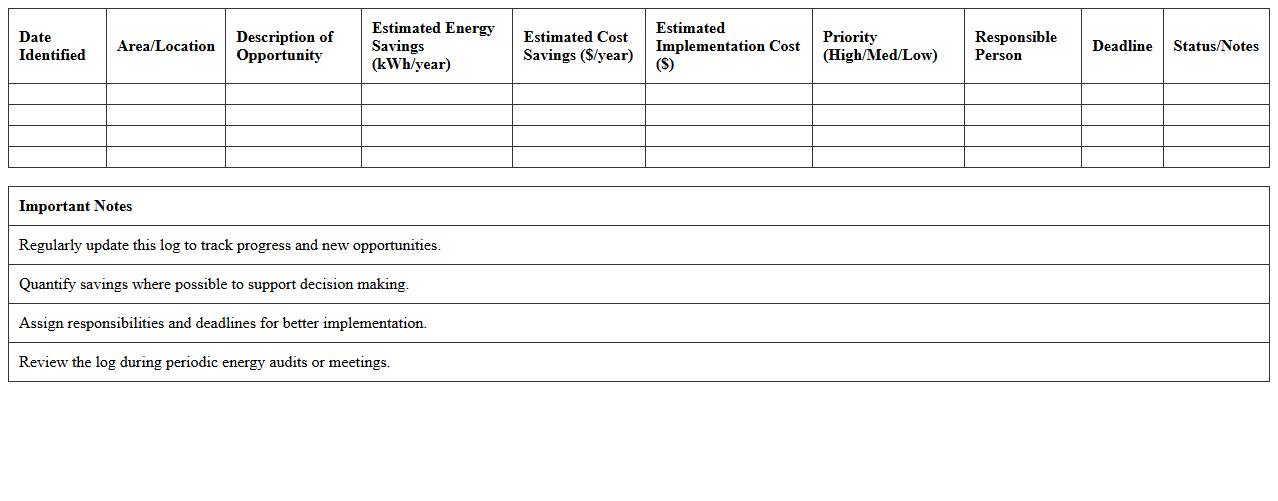
Energy Savings Opportunities Log for Offices is a comprehensive document designed to track and identify potential areas for reducing energy consumption within office environments. It systematically records energy use patterns, highlights inefficiencies, and suggests practical measures to enhance energy efficiency and reduce costs. Utilizing this log helps organizations improve sustainability, lower utility bills, and contribute to environmental conservation efforts.
Building Envelope Thermal Assessment Template
The
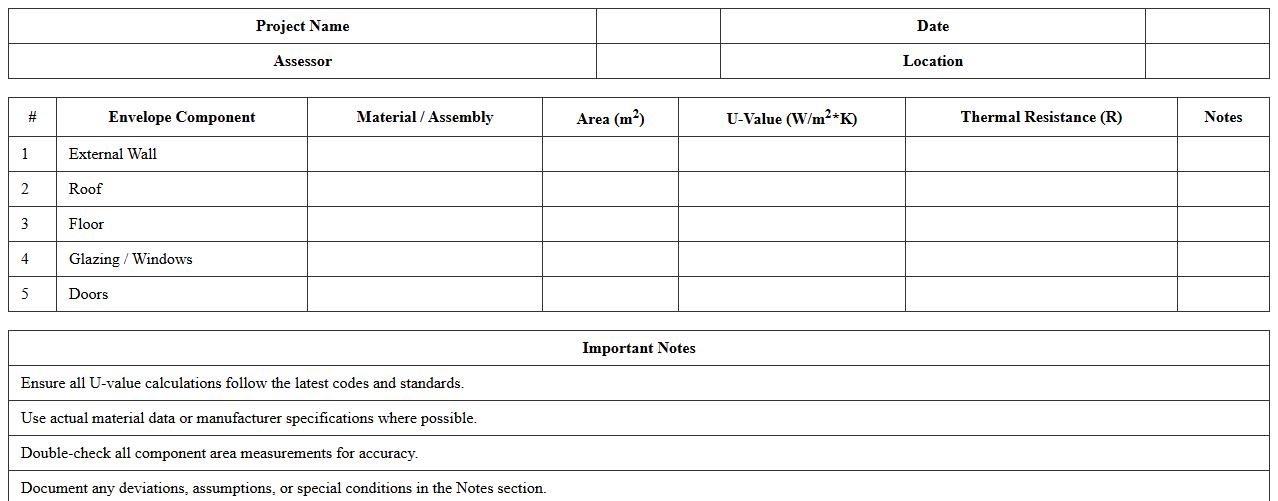
Building Envelope Thermal Assessment Template document is a structured tool designed to evaluate the thermal performance of a building's exterior components such as walls, roofs, windows, and doors. This assessment helps identify areas of heat loss or gain, enabling targeted improvements in insulation, energy efficiency, and occupant comfort. By using this template, architects, engineers, and energy auditors can systematically analyze and optimize building envelopes to reduce energy consumption and enhance sustainability.
Plug Load Energy Consumption Calculator
The
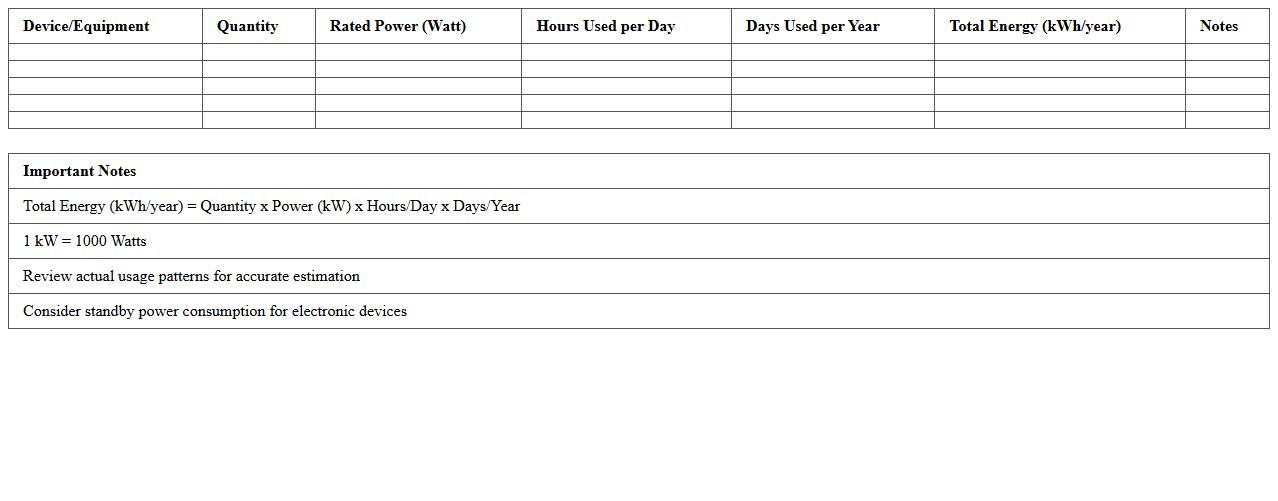
Plug Load Energy Consumption Calculator document provides a detailed tool to estimate the energy usage of electronic devices plugged into outlets, helping users identify high-consumption appliances. By analyzing plug load data, this calculator enables more accurate energy audits and supports informed decisions on reducing electricity costs and environmental impact. This resource is essential for homeowners, businesses, and energy managers aiming to optimize energy efficiency and implement sustainable practices.
Utility Bill Tracking and Comparison Excel
A
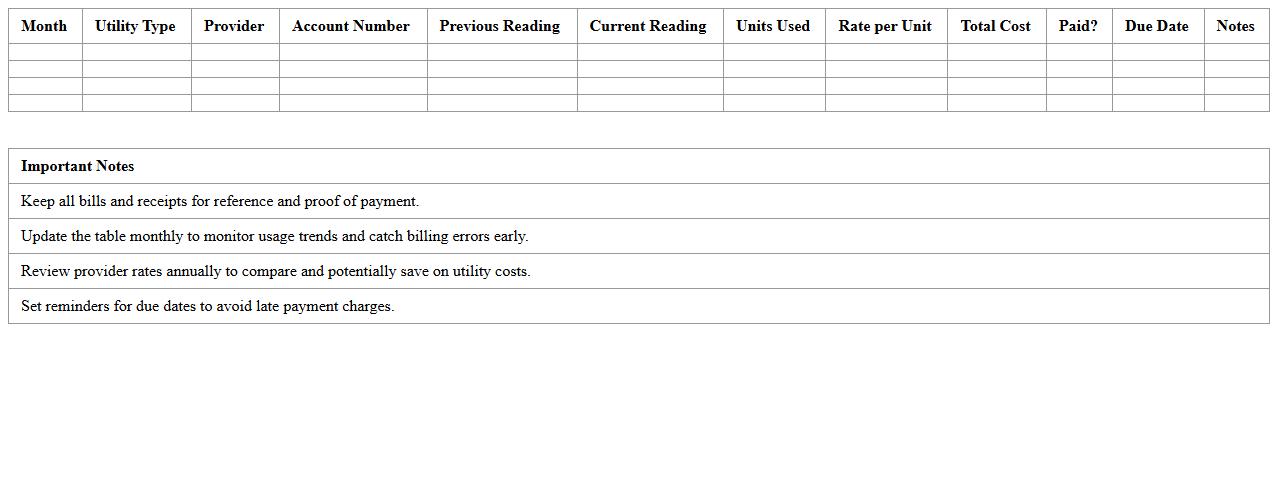
Utility Bill Tracking and Comparison Excel document is a spreadsheet tool designed to monitor, organize, and analyze monthly utility expenses such as electricity, water, gas, and internet bills. It helps users identify patterns in their consumption, detect anomalies, and compare costs over time or between different providers. By using this tool, individuals and businesses can make informed decisions to optimize energy use, reduce costs, and forecast future expenses more accurately.
Baseline vs. Post-Audit Energy Performance Sheet
The
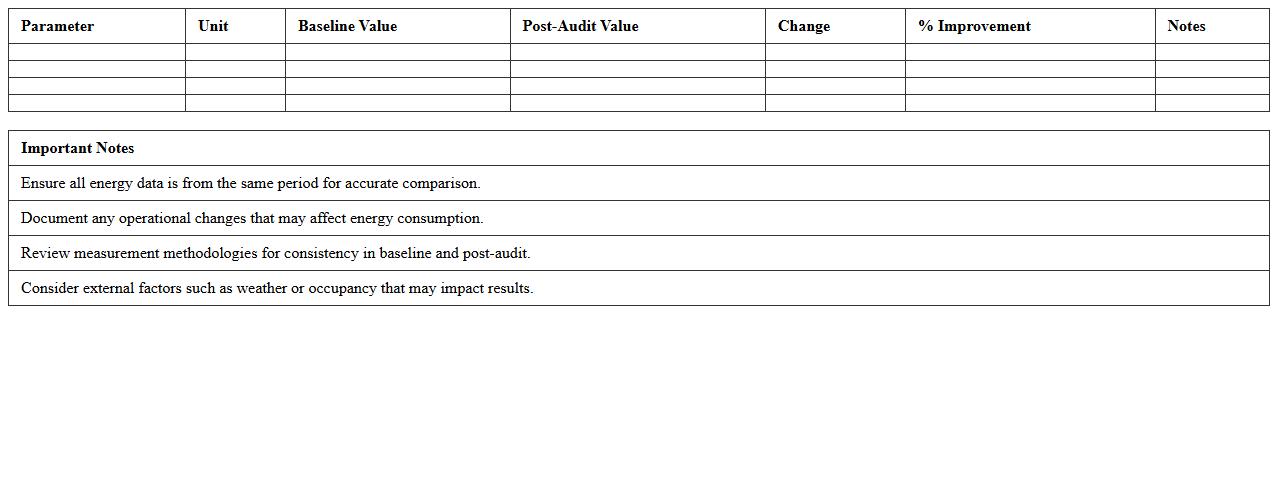
Baseline vs. Post-Audit Energy Performance Sheet document compares energy consumption data before and after an energy audit, highlighting the effectiveness of implemented energy-saving measures. It provides a clear, quantifiable view of energy performance improvements, enabling organizations to track progress, verify savings, and identify areas for further optimization. This document is essential for making data-driven decisions that enhance energy efficiency and reduce operational costs.
Energy Efficiency Measures Cost-Benefit Analysis Template
The
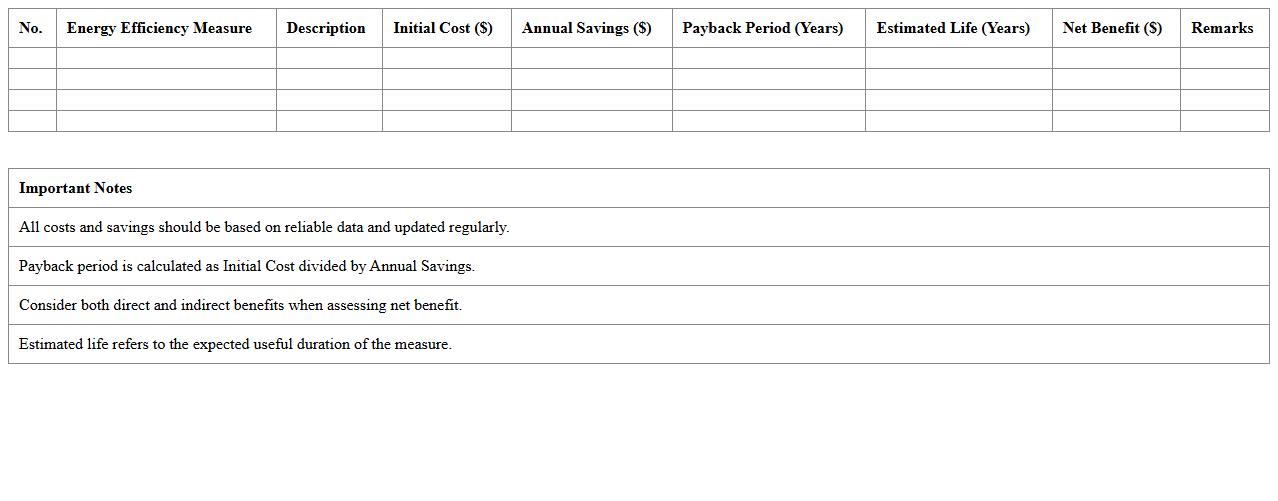
Energy Efficiency Measures Cost-Benefit Analysis Template document provides a structured framework to evaluate the financial viability and environmental impact of proposed energy-saving projects. It enables users to compare upfront costs, operational savings, and payback periods, ensuring informed decision-making for investments in efficiency upgrades. This template is essential for businesses and organizations aiming to optimize energy use, reduce expenses, and contribute to sustainability goals.
How can energy consumption data be auto-imported into the Energy Audit Excel template for office buildings?
The Energy Audit Excel template supports auto-importing energy consumption data through integrated Power Query connections. Users can connect external data sources such as smart meters or building management systems to pull real-time data directly into the spreadsheet. This automation eliminates manual entry errors and ensures up-to-date consumption metrics for accurate audits.
What formula tracks HVAC system efficiency in the Energy Audit spreadsheet?
The spreadsheet employs the Coefficient of Performance (COP) formula to track HVAC efficiency, calculated as the ratio of heating or cooling output to energy input. This formula dynamically analyzes HVAC energy consumption against the thermal output measured within the template. By monitoring COP values, facility managers can identify inefficiencies and optimize system operations.
How does the Excel tool calculate savings from lighting retrofits in each office zone?
The tool utilizes a savings calculation by comparing baseline lighting energy use against post-retrofit consumption values. It factors in parameters like wattage reduction, hours of operation, and occupancy to estimate energy savings per office zone. This zone-specific savings metric helps prioritize retrofit investments based on return on investment within the building.
Which dashboard visualizes peak versus off-peak energy loads within office floorplans?
The template includes a Load Profile Dashboard that graphically presents peak and off-peak energy demands mapped onto office floor layouts. Interactive charts and heatmaps display energy intensity by time period and location, enabling easy identification of usage patterns. This visualization aids in implementing demand response strategies and load shifting initiatives.
Can the spreadsheet link maintenance logs to energy anomalies detected in meter readings?
Yes, the Energy Audit spreadsheet supports linking maintenance logs to detected energy anomalies by correlating timestamps in meter readings with recorded service events. This relationship enables users to analyze whether equipment faults or maintenance activities impact energy consumption patterns. The feature enhances diagnostic capabilities for proactive facility management.